Your post goes live. No warning. No suspension. No scary email from X.
But the numbers are wrong.
Replies stop. Search traffic disappears. Hashtags do nothing. A friend who does not follow you searches for your handle and says your posts are not showing up where they should.
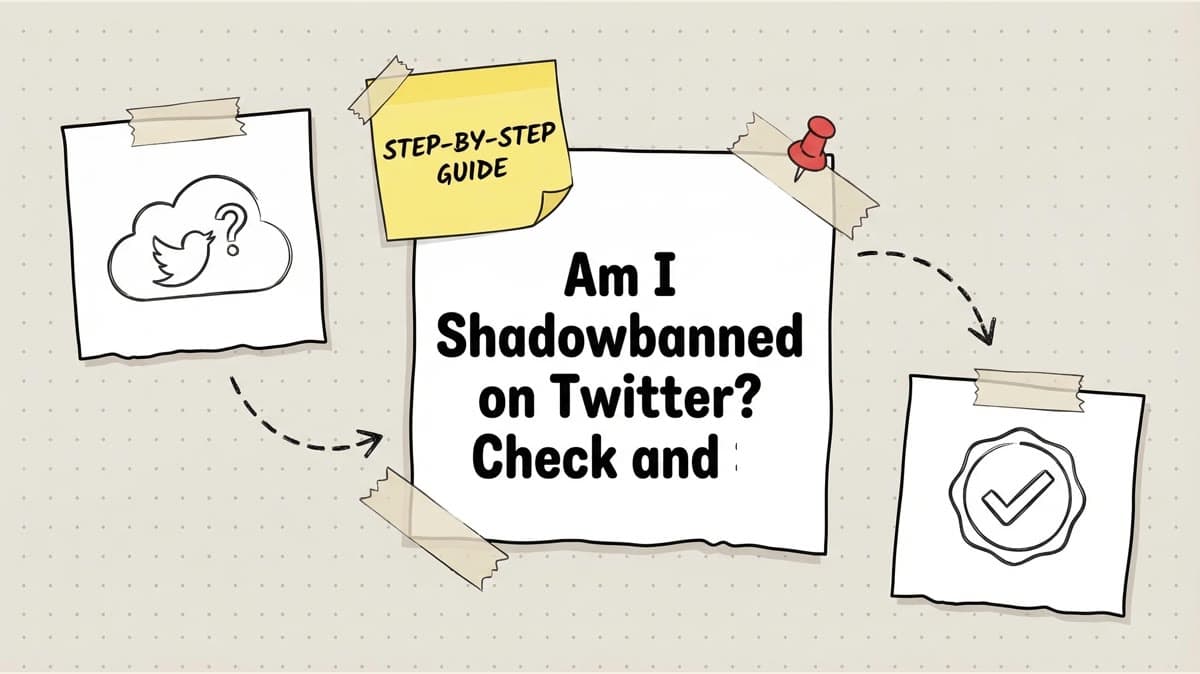
That is why people search for a Twitter shadowban checker. The hard part is that X does not usually hand you a neat message saying, "Your reach has been reduced." You have to separate a real visibility issue from a bad posting day, a weak post, or a normal algorithm swing.
This guide gives you the practical tests first, then the recovery plan.
quick answer
To check if you are shadowbanned on Twitter/X, do not rely on one third-party checker. Run a manual search test from an account that does not follow you.
Fast test:
- Post a unique phrase that nobody else would use, like
blue-lamp-visibility-test-8391. - Wait a few minutes.
- Ask someone who does not follow you to search that exact phrase on X.
- Have them check the Latest tab, not only Top results.
- Repeat with a reply test: reply to a public post and ask the same person whether your reply is visible.
If your unique post and replies do not show up for non-followers, you may be dealing with reduced visibility. If they do show up, the problem is more likely content quality, timing, audience fatigue, or a normal reach dip.
X does not usually use the word "shadowban" in official policy language. It describes enforcement and safety actions in terms of limiting access, reducing distribution, or making content less discoverable. Start with X's official pages on enforcement options and platform manipulation and spam if you want the policy side.
what people mean by a Twitter/X shadowban
A shadowban is user language for reduced visibility without a full account ban. Your account still opens. You can still post. Your followers may still see you. The problem is discovery: search, replies, hashtags, recommendations, or non-follower reach may stop behaving normally.
Common forms include:
| Type | What it looks like | How to test it |
|---|---|---|
| Search visibility issue | Your posts do not appear for exact phrase searches | Unique phrase test from a non-follower account |
| Reply visibility issue | Your replies are hidden or buried for people who do not follow you | Reply to a public post and ask a non-follower to check |
| Suggestion issue | Your account stops appearing in search suggestions or recommendations | Ask a non-follower to search your handle and related keywords |
| Broad visibility issue | Search, replies, hashtags, and recommendations all drop at once | Run all tests and compare analytics |
Do not call every engagement drop a shadowban. A post can fail because it was posted at the wrong time, opened with a weak hook, repeated an old idea, or reached an audience that has already seen too much of the same thing. If timing is the pattern, this guide to the best times to post on Twitter/X is a better next step than panic-testing your account every hour.
signs that point to reduced visibility
Low likes are not enough. Look for a cluster of symptoms.
Run a shadowban check if you see several of these at the same time:
- A sudden drop in impressions, not a slow decline.
- Search impressions falling to zero or near-zero.
- Your exact posts not appearing in search for non-followers.
- Replies visible to you but not to people outside your follower base.
- Hashtags no longer surfacing your posts.
- New follower growth stopping suddenly while posting volume stays the same.
- A recent warning, locked-account moment, suspicious login prompt, or automation notice.
- A recent burst of repetitive links, mass replies, or follow/unfollow behavior.
The word "sudden" matters. If your reach has been fading for weeks, you may have a content strategy problem. If it fell off a cliff overnight while your posting behavior changed, run the tests.
how to run a reliable shadowban check
Use manual checks first. Third-party checker sites can be useful, but they break when X changes search behavior, API access, or page structure.
test 1: unique phrase search
Post a short public post with a nonsense phrase. Do not include a link. Do not use hashtags. Keep it clean.
Example: blue-lamp-visibility-test-8391
Then ask someone who does not follow you to search the exact phrase. They should check the Latest tab because algorithmic Top results can hide posts for reasons unrelated to a visibility restriction.
Result guide:
- They can find it: you are probably not search-banned.
- They cannot find it: you may have a search visibility issue.
- You can find it but they cannot: that is a stronger sign of reduced visibility.
test 2: reply visibility
Reply to a public post from an account your test person can access. Use a normal, relevant reply. Do not paste the same unique phrase everywhere.
Ask the test person to open the post and look for your reply.
- If your reply is visible, a reply restriction is less likely.
- If your reply is missing, hidden behind a filter, or only visible when they search your exact handle, you may have a reply visibility issue.
test 3: profile and handle search
Ask the same person to search your handle and display name. Have them try both exact handle and partial name.
This is useful if you suspect the issue is profile discovery rather than post-level search.
test 4: analytics comparison
Compare the last few posts against your normal baseline.
Look for:
- impressions from search;
- impressions from profile visits;
- replies from non-followers;
- follower growth;
- link clicks if you included links;
- whether posts without links perform differently from posts with links.
If only link posts are failing, you may not be shadowbanned. You may be hitting a spam or link-quality pattern.
Schedule your posts across every platform
Draft once, publish everywhere — automatically.
No credit card · Cancel anytime
common triggers to audit before you panic
X's policies focus heavily on spam, platform manipulation, and abusive automation. X's platform manipulation and spam policy is the first policy page to read if your reach disappeared after aggressive growth tactics.
Audit the last seven days:
- Automation: Did a tool post, like, follow, or reply faster than a person would?
- Repeated links: Did you post the same URL over and over with small copy changes?
- Mass replies: Did you reply to dozens of unrelated accounts in a short window?
- Follow/unfollow behavior: Did you follow many accounts, then quickly unfollow them?
- Duplicate posts: Did you repost the same text repeatedly?
- Hashtag stuffing: Did you add broad or unrelated hashtags to many posts?
- Login changes: Did you jump between VPN locations, devices, or countries quickly?
- Policy-adjacent content: Did several posts get reports, removals, or warnings?
For developers and tool-heavy teams, also read the X Developer Policy and X's rate limits documentation. You do not need to memorize every technical limit, but you do need a basic rule: if your workflow behaves like a bot, your account can start being treated like one.
If you manage more than one account, document your process. A messy multi-account workflow creates accidental spam patterns: duplicated posts, repeated links, identical replies, and rushed login behavior. This guide on how to manage multiple social media accounts can help you clean that up before it turns into an account-health problem.
recovery plan if your tests fail
If the manual tests point to reduced visibility, stop trying to force reach back immediately. That usually makes the pattern worse.
1. stop the likely trigger
Disconnect tools you do not trust. Stop mass replies. Stop follow/unfollow. Stop repeating the same link. Stop posting the same copy every hour.
If you recently connected a new app, remove it from your account access settings. If you recently changed your posting system, roll back to a calmer version.
2. clean up obvious problems
Delete posts that clearly break rules or look like spam. Do not delete half your account in a panic. Focus on the obvious issues: duplicate link posts, junk hashtags, aggressive replies, or content that triggered warnings.
X's Rules Enforcement transparency page is a reminder that policy enforcement is real and ongoing. Your job is not to find a trick around it. Your job is to remove the behavior that looks manipulative.
3. post less, but better
For a few days, avoid bursts. Publish a small number of original posts, reply like a human, and skip the repetitive promotional links.
Good recovery behavior looks boring:
- one or two thoughtful original posts;
- a few relevant replies in your niche;
- no mass tagging;
- no copied engagement bait;
- no repeated links;
- no automation experiments.
4. use replies to rebuild normal behavior
Bots post and disappear. Real people respond, read, and participate.
Spend time replying to people you actually follow. Ask useful questions. Add context. Avoid drive-by replies like "great thread" or "check this out." The point is not to hack engagement. The point is to make your account behavior look normal because it is normal.
5. wait before retesting
Reduced visibility often clears after the risky behavior stops, but there is no guaranteed public timer. Retest after a few days, not every 20 minutes. If you keep posting test phrases and changing behavior constantly, you make it harder to read what is happening.
If visibility is still broken after a long quiet period and you believe there is a mistake, use X's support paths and describe the observable issue: posts not appearing in search, replies not visible, or account discovery not working. Do not lead with "shadowban" if the form asks for a specific problem.
how to prevent the next visibility problem
Prevention is less dramatic than recovery. It is mostly about removing patterns that look automated, manipulative, or low-quality.
Use this checklist:
- Vary your post formats: short posts, threads, replies, quotes, and occasional links.
- Space promotional links apart instead of posting the same URL repeatedly.
- Keep hashtags targeted and minimal.
- Avoid follow/unfollow as a growth tactic.
- Review connected apps monthly.
- Keep login behavior consistent when possible.
- Watch analytics weekly so you catch visibility drops early.
- Build a content calendar instead of posting in bursts when you remember.
If the calendar part is where you struggle, this social media workflow guide will help you set up a repeatable process. If the bigger pain is time, this guide on how to save 15 hours managing multiple accounts is a good next read.
safer scheduling without spam patterns
Scheduling is not the problem. Bad scheduling is the problem.
The risky version looks like this: you write one promotional post, paste it into every platform, repeat the same link daily, then wonder why the account starts looking spammy.
A safer version looks like this:
- draft the first version with a tweet generator only if you are stuck, then rewrite it in your own voice;
- write platform-specific copy;
- space posts intentionally;
- mix promotional posts with useful native content;
- review analytics before repeating a link;
- avoid auto-replies, auto-follows, and engagement tricks;
- keep a human in control of the calendar.
Timed Post helps with the sane version. Instead of opening five apps and rushing the same link everywhere, draft the batch once, adapt it for X, Instagram, LinkedIn, Facebook, TikTok, YouTube, Threads, and Pinterest, and schedule it from one place. That gives you consistency without turning your X account into a repetitive posting machine.
If you need the full setup, read the guide to scheduling posts across multiple platforms and the broader multi-platform posting guide. If you are also seeing reach issues on TikTok, this TikTok shadowban fix guide covers the same account-health mindset for a different platform.
final take
A Twitter/X shadowban checker can give you a hint, but manual tests are stronger. Post a unique phrase. Ask a non-follower to search it. Check reply visibility. Compare analytics. Then audit the behavior that changed right before reach dropped.
If you are restricted, do not spam your way out. Remove the trigger, clean up obvious issues, post calmly, engage like a person, and give the account time to recover.