You open a 40-minute YouTube tutorial because the title promises the exact fix you need. The thumbnail looks polished. The creator sounds confident. The view count says hundreds of thousands of people watched it.
Then the comments start warning you: "This is outdated." "Doesn't work anymore." "The title is misleading."
Before 2021, you could glance at the like-to-dislike ratio and decide whether to keep watching. Now the dislike button is still there, but the public count is gone. That makes tutorials, product reviews, and breaking-news clips harder to judge quickly.
The important part: viewers and creators are not in the same position. Viewers can only use third-party estimates or indirect signals. Creators can still see their own real dislike data in YouTube Studio.
quick answer
YouTube no longer shows public dislike counts on videos. YouTube announced the change in November 2021 and kept the dislike button, but hid the visible count from viewers.
Here is the practical version:
- If you are a viewer: you cannot see exact dislike counts inside YouTube. A tool like Return YouTube Dislike can show archived or estimated counts, but newer-video numbers are not the same as YouTube's private creator data.
- If you are the creator: you can still check your own like and dislike data in YouTube Studio. Start from your video analytics, then review engagement signals in context. YouTube's own help docs explain how to get started with YouTube Analytics.
- If you are judging someone else's video: use the dislike estimate as one signal, not proof. Read recent comments, check the upload date, look for pinned corrections, and compare the advice against a credible source.
- If your own video got more dislikes than normal: do not panic. Compare dislikes with watch time, comments, title accuracy, and subscriber impact before changing the content strategy.
what changed with YouTube dislikes
YouTube's official reason for hiding public dislike counts was to reduce targeted dislike attacks, especially against smaller creators. The button still works. Viewers can still dislike a video. YouTube can still use that feedback internally. What changed is that viewers no longer see the public number beside the button.
That split matters:
| User type | What they can see | How reliable it is |
|---|---|---|
| Regular viewer | Like count, comments, visible engagement, third-party dislike estimates | Useful, but incomplete |
| Video owner | Real likes and dislikes in YouTube Studio | Best source for that creator's own videos |
| Tool developer or researcher | Limited public data through APIs and third-party datasets | Depends on access and methodology |
YouTube also changed the public data available through its API. Google's YouTube Data API revision history notes that public dislike counts were removed from normal public API access after the policy change. That is why most tools cannot simply ask YouTube for the exact dislike count on someone else's new video.
For viewers, the loss is simple: you lost a fast quality filter. A video with 20,000 likes might be excellent, or it might have 19,000 dislikes you cannot see. The like count alone does not tell the ratio.
your options as a viewer
If you are trying to decide whether a video is worth your time, use this order.
- Check the upload date. A tutorial from three years ago may be wrong even if it was good when published.
- Scan recent comments first, not just top comments. Old top comments can stay positive after the content becomes outdated.
- Use a dislike viewer for a rough read. Treat the number as a clue, not a verdict.
- Look for creator corrections. Pinned comments, updated descriptions, and follow-up videos often tell you whether the creator has fixed the issue.
- Cross-check high-stakes advice. For health, finance, legal, or security topics, do not rely on crowd reaction alone.
For YouTube work specifically, you can also save time by improving the way you handle the video after it is published. If you turn long videos into clips, this guide to clipping YouTube videos pairs well with dislike checks: bad clips usually come from videos that already had a title, pacing, or accuracy problem.
how Return YouTube Dislike works
Return YouTube Dislike is the best-known dislike viewer. The project is available as a browser extension and has public code on GitHub, which makes it easier to inspect than a random black-box extension.
The key thing is understanding what it is showing.
- Older videos: the extension may rely on archived dislike data collected before YouTube hid the count.
- Newer videos: the extension has to estimate. It can use votes from extension users and modeling from available engagement patterns.
- Low-traffic videos: estimates can be noisy because there are fewer signals.
- Brand-new uploads: numbers can move around quickly because early engagement is still forming.
That means the tool is helpful for a quick gut check, especially on popular videos. It is not a substitute for YouTube Studio data, and it should not be treated as an exact source for a creator's private metrics.
A good rule: if the estimate shows a normal-looking ratio, move on. If it shows a very high dislike ratio, pause and inspect the comments, upload date, and sources before you invest time in the video.
Schedule your posts across every platform
Draft once, publish everywhere — automatically.
No credit card · Cancel anytime
how creators can see their own dislikes
Creators still have the best data. If the video is yours, skip third-party estimates and use YouTube Studio.
To check dislikes on your own video:
- Sign in to YouTube.
- Open YouTube Studio.
- Go to Content.
- Choose the video you want to inspect.
- Open Analytics.
- Review the engagement data for likes, dislikes, comments, retention, and other signals.
YouTube's help center has a general walkthrough for accessing YouTube Analytics, and its analytics docs explain how creators can review performance across reach, engagement, audience, and revenue views.
The mistake is looking at dislikes alone. A dislike spike can mean different things:
- The title promised something the video did not deliver.
- The thumbnail oversold the result.
- The topic was divisive.
- The tutorial steps were unclear or outdated.
- The video attracted the wrong audience from another platform.
- The comments were negative because of one specific section, not the whole video.
If you are checking dislikes because your channel suddenly feels off, pair this with subscriber data too. This YouTube subscriber guide shows where to check whether a video actually changed your subscriber trend or just collected a few loud reactions.
how to read a dislike ratio without overreacting
Dislikes are useful because they are blunt. They are also easy to misread.
Use this simple read:
| Situation | What it usually means | What to do next |
|---|---|---|
| High dislikes plus low retention | The video likely disappointed viewers early | Rewatch the intro, title, and first steps |
| High dislikes plus normal retention | The topic may be divisive | Read comments before changing strategy |
| High dislikes on one video in a series | Possible mismatch or quality issue | Compare against nearby videos in the same format |
| High dislikes on sponsored content | Viewers may feel sold to | Check whether the sponsor segment blurred the video's promise |
| Low dislikes but weak performance | Dislikes are not the problem | Look at click-through, watch time, posting time, and promotion |
Tutorials and how-to videos are where dislike data tends to be most useful. If people dislike a repair guide, coding walkthrough, recipe, or setup tutorial, they are often telling you the result did not work for them.
News, politics, brand campaigns, and opinion-heavy videos are different. A high dislike ratio may reflect disagreement, not bad execution. That does not mean you ignore it. It means you read the comments and the retention data before assuming the video failed.
what to do after your video gets more dislikes than normal
Run a small audit before you rewrite your whole channel plan.
1. Check the promise. Read the title and thumbnail out loud. Did the video deliver exactly that promise, or did it wander?
2. Watch the first minute. Most frustration starts early. If the intro is slow, the setup is confusing, or the first answer is buried, viewers may punish the video before they reach the useful part.
3. Read comments in clusters. Ignore one-off insults. Look for repeated complaints. If five people say the same step failed, that is useful feedback.
4. Compare against subscriber movement. A few dislikes do not matter if the video still brought in subscribers. If dislikes and subscriber loss happen together, the issue deserves more attention.
5. Fix what can be fixed. Update the description, pin a correction, add chapters, change the title if it overpromised, or publish a cleaner follow-up.
Dislikes are not a moral judgment on the channel. They are a diagnostic signal. Use them to find the leak.
build a better post-publish workflow
A lot of creators only check dislikes when something feels wrong. That is too late. Build a light review habit after every upload:
- Check early comments after the first few hours.
- Review likes, dislikes, and retention the next day.
- Note whether the title matched the actual viewer response.
- Clip the strongest section for short-form posts.
- Promote the video across the platforms where your audience already hangs out.
That last step is where the work gets messy. You publish on YouTube, then open X, Instagram, LinkedIn, Facebook, TikTok, Threads, Pinterest, and maybe a few community channels. By the time you are done, you have spent more time copying links than reading the signals that tell you whether the video worked.
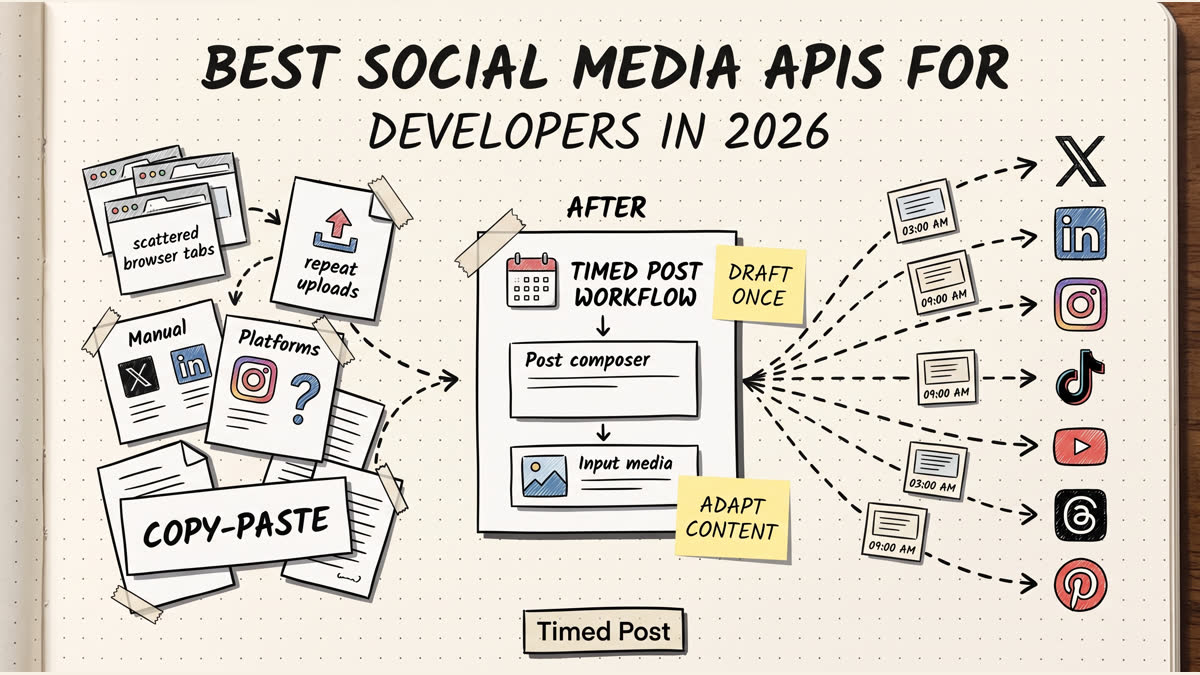
Timed Post helps with that batch. Draft the YouTube promo once, adapt it for each platform, and schedule the posts across X, Instagram, LinkedIn, Facebook, TikTok, YouTube, Threads, and Pinterest from one calendar. If you are tired of the tab-hopping version, start with this guide to scheduling posts across multiple social media platforms or the broader multi-platform posting guide.
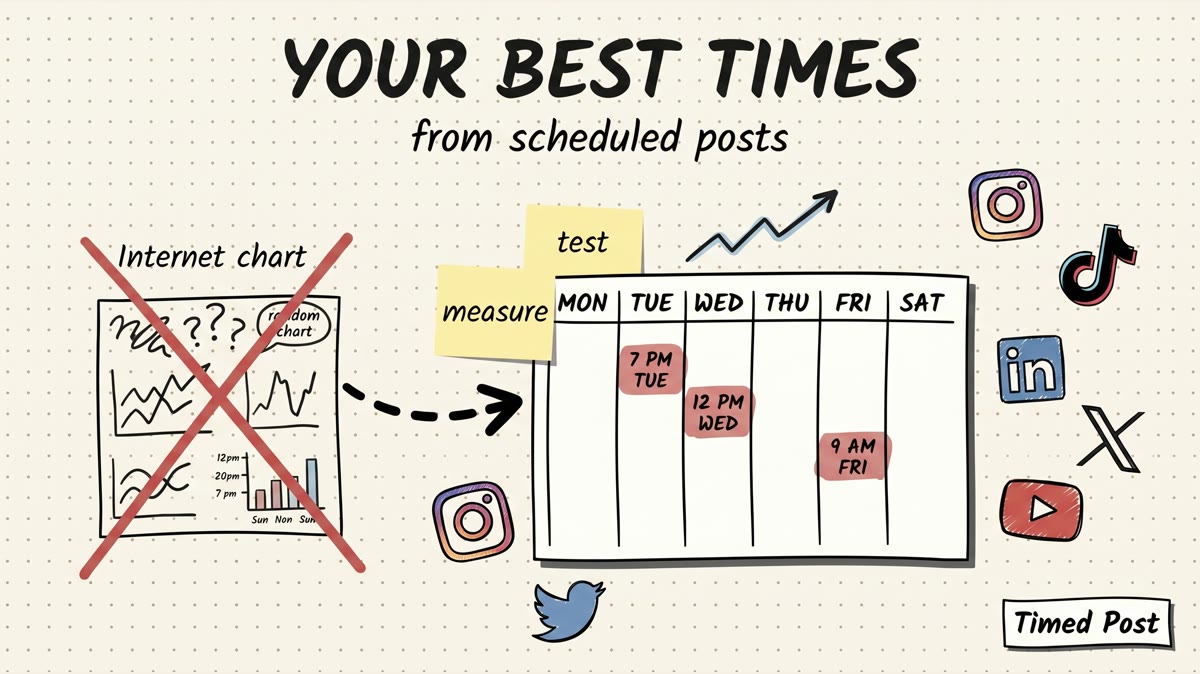
If timing is part of the problem, use a practical timing plan too. This guide on the best times to post on social media can help you stop guessing when to send the next YouTube promo.
final take
A YouTube dislike viewer can help you make faster decisions, but it cannot restore perfect public data. Viewers get estimates and clues. Creators get the real numbers in YouTube Studio.
Use dislike data the right way: spot misleading tutorials, identify videos that broke trust, and catch your own expectation mismatches early. Then fix the workflow around the video, not just the number beside the thumb icon.